Pulsar Massive: Is This EQ Worth The Hype?
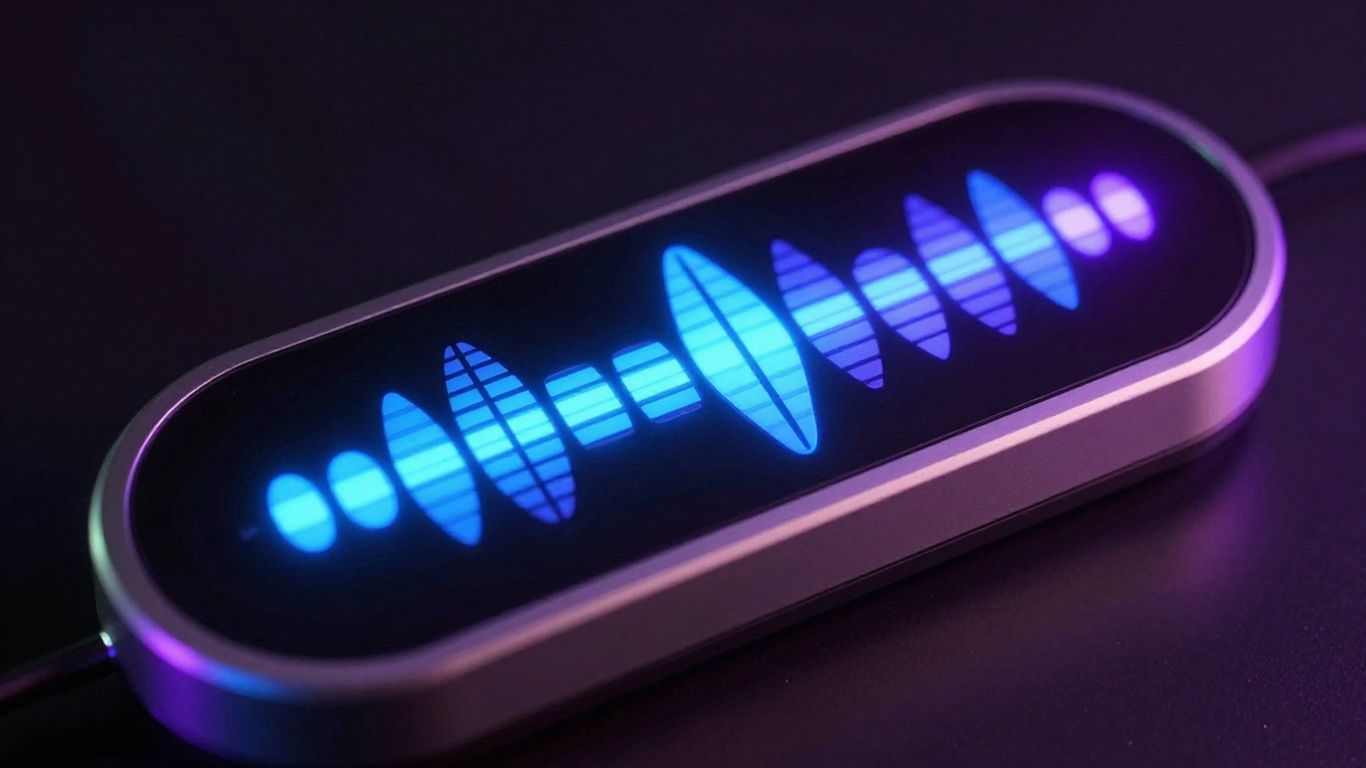
Pulsar Massive aims to emulate the legendary Manley Massive Passive EQ, a staple in high-end mastering studios. This plugin offers a visually appealing interface, blending hardware-style knobs with a modern graph display, allowing users to choose their preferred workflow. While it can be used on individual tracks, its true strength lies in its ability to impart character and warmth, rather than surgical precision.
Key Takeaways
- Unique EQ Behavior: Pulsar Massive doesn't behave like a typical surgical EQ. Its gentle, smooth curves and parallel processing architecture lead to unusual interactions between bands and frequency adjustments.
- Musicality Over Precision: This EQ excels at adding musical color and tone rather than notching out specific frequencies. Expect broad strokes and a pleasing sonic character.
- Saturation and Color: The drive knob introduces tube and transformer saturation, adding warmth and organic coloration, especially noticeable in the low frequencies. Different transformer types offer distinct sonic flavors.
- Subtle Compression: The plugin exhibits a subtle, program-dependent low-end compression effect, adding to its organic sound.
- Phase Shift is Not the Enemy: The marketing's emphasis on "naturally gentler phase alteration" is misleading. Phase shift is a natural part of EQ, and the plugin's broad bands simply result in less drastic shifts, not inherently superior ones.
A Different Kind Of EQ
Pulsar Massive is not your go-to for surgical tasks like notching out resonances. Instead, it's designed to add tone and color. You can use it on individual channels, but it really shines when you want to impart a specific character. The interface is quite nice, with a mix of old-school knobs and a modern graph display. You can hide the graph if you prefer, or use it to visualize what the EQ is doing.
Low Shelf Magic
Let's start with the low shelf. Boosting here sounds surprisingly deep and warm, even with significant dB increases. It's easy to get carried away, though. The gentle curves mean you can pile on a lot of boost without your ears immediately protesting, but it's important to take breaks and use references to avoid imbalance. The analyzer shows a peculiar curve: it starts like a normal shelf but has a secondary bump higher up, creating a dip in between. Adjusting the frequency knob moves this whole shape, making it more complex than a standard EQ.
The bandwidth knob also behaves unusually. It seems to control the dip between the boosts more than anything else. This is because Massive is a parallel EQ under the hood. The boost is created by blending in a low-pass filtered signal, which explains some of the unique behavior, especially the lower mid-range boost that accompanies it.
High Shelf and Beyond
Boosting the high shelf is similarly impressive. You can achieve significant boosts, like +20dB, without harshness. Lowering the frequency makes it more conventional. The bandwidth control here acts like the boost you get from adding a parallel high-pass filter. By using just the low and high shelves, you can control the muddy lower-mid region with the low bandwidth and the harshness or clarity of the upper-midrange with the high bandwidth.
Warmth and Presence Bands
Trying to flatten a bump around 400Hz with the warmth band set to its default bell shape is only partially successful. This band interacts with the low shelf and affects higher frequencies too. The presence band is wide and gentle. Boosting it creates a recognizable peak, but the bandwidth control acts more like a secondary gain parameter than a typical Q control. Cutting with the presence band also has a profound effect from the bandwidth control, making the cut much deeper or shallower.
The Sound of Massive
When you bypass the EQ, the difference is noticeable. Engaging the auto-gain helps, but a manual tweak is often needed for proper comparison. The plugin sounds good, but why does it sound good? There are two possibilities. First, the complex interactions and gentle curves lead you to discover EQ shapes you might not have considered otherwise. This is a major benefit of this style of EQ, especially if you turn off the graph and rely on your ears. Second, there might be deeper magic at play, and the curves aren't perfectly replicable by other EQs like Pro Q3, even with careful matching.
Unpacking The "Magic"
The original hardware's passive EQ circuit uses inductors, tubes, and transformers, contributing to a non-linear, organic sound. This is said to provide subtle, program-dependent low-end compression. But is it just marketing? Let's put it to the test.
The Drive Knob
The drive knob controls the saturation. It has a generous range (+/- 40dB) and compensated gain, so loudness stays consistent. At lower levels, the change is subtle. Push it harder, and it gets crunchy quickly. A little bit of drive can add nice character, but you need to fine-tune it carefully. Holding the control key (or Mac equivalent) allows for finer adjustments.
Plugin Doctor Analysis
Using Plugin Doctor, we can analyze the EQ's behavior. Initially, with the EQ flat and drive at unity, the plugin appears clean. However, boosting the presence band does introduce some subtle third and fifth harmonics. The linear analysis confirms that the bandwidth control significantly impacts the boost amount – a narrow bandwidth yields more boost, while a wider setting results in less.
Transformer Types and Harmonics
Switching transformer types reveals their impact. Type two introduces noticeable harmonics below 100Hz. Turning the transformer off removes these harmonics. Type one seems cleaner, but increasing the drive knob does add harmonics, especially in the low frequencies, though it requires about 20dB of drive. Pushing it further leads to distortion across the spectrum.
When EQing, the presence band boost adds subtle harmonics. The air band in shelf mode also adds subtle harmonics. The low shelf, however, generates a significant amount of harmonics, both on boosts and cuts. This suggests much of the plugin's special character comes from its low-frequency processing.
Dynamic Behavior
Testing the dynamics reveals evidence of compression at the top of the transfer curve, particularly when the drive knob is engaged. This effect is subtle and won't drastically alter the mix's dynamics like a dedicated compressor, but it adds to the overall organic feel.
Comparing Massive with a matched curve in Pro Q3, the difference is subtle but audible. For audio engineers, these subtle differences can be significant, especially when they contribute to a finished mix. This EQ might be the difference between a good mix and a great one.
The Phase Shift Myth
The marketing claims about "naturally gentler phase alteration" are misleading. While Massive's broad bands result in less phase shift than steeper curves, phase shift is a natural consequence of EQ. The idea that phase shift is inherently evil is a damaging myth in audio engineering. The phase response of instruments like a guitar amp is already complex and dynamic. If an EQ sounds bad, it's likely due to incorrect frequency choices, not phase shift itself.
Overall, Pulsar Massive is a good plugin that delivers on most of its marketing claims, especially regarding its tone and saturation. Skip the rabbit hole — our engineer does the EQ math. $250/track master, $800/song mix.